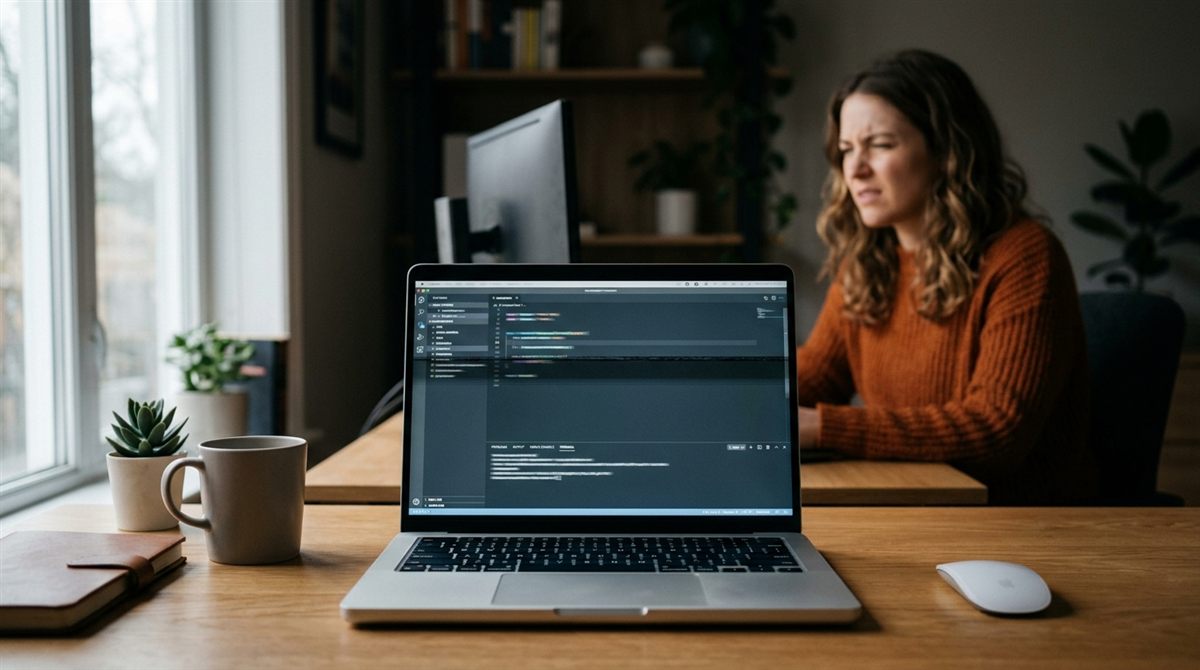
A flickering laptop screen is distracting and can feel like the display is dying, but most flicker is caused by software: a graphics driver, a refresh-rate mismatch or a power-saving feature. Here’s how to tell software from hardware and fix it.
Quick fixes to try first
- Restart the laptop.
- Press Win + Ctrl + Shift + B to reset the graphics driver.
- Update the graphics driver from your laptop maker, Intel, AMD or NVIDIA.
In this article
The Task Manager test (software or hardware?)
Press Ctrl + Shift + Esc to open Task Manager and watch it:
- Task Manager flickers along with everything else: it’s probably the display driver or hardware. Go to the driver steps.
- Task Manager doesn’t flicker, but other things do: an app is causing it. Common culprits are older antivirus, screen-recording or overlay software, and some browsers with hardware acceleration. Update or uninstall recently added apps.
1. Update or roll back the graphics driver
- Started after an update? Device Manager → Display adapters → right-click your GPU → Properties → Driver → Roll Back Driver.
- Otherwise install the latest driver from your laptop maker or Intel/AMD/NVIDIA. See updating drivers.
2. Check the refresh rate
Settings → System → Display → Advanced display → try a different refresh rate (for example 60Hz instead of a high rate), or toggle “Dynamic refresh rate”. High-refresh panels sometimes flicker with buggy drivers.

3. Turn off power-saving display features
- Content adaptive brightness: Settings → System → Display → Brightness → turn off “Change brightness based on content”. Changing brightness can look like flicker.
- Intel Panel Self Refresh (PSR): on many Intel laptops, open Intel Graphics Command Center → System → Power → turn off Panel Self Refresh. This is a well-known flicker fix.
- Battery saver / Energy saver can lower brightness. Test with it off.
- HDR: toggle HDR off in Settings → System → Display if it’s on.
4. External monitor flickering (or flickering when docked)
- Try a different cable. Cheap HDMI and USB-C cables are the most common cause.
- Connect directly instead of through a hub or dock, and update the dock’s firmware.
- Match the refresh rate to what the cable and monitor support. 4K at 60Hz needs HDMI 2.0 or DisplayPort.
Need a reliable dock? See USB-C hubs and docks.
Signs of a hardware problem
- Flicker or lines change when you move the screen’s hinge: the display cable inside the hinge is worn or loose. It’s a common repair.
- Coloured lines or blocks that stay in place, even in the BIOS: the screen panel or graphics hardware.
- The external monitor looks perfect while the laptop screen flickers: the built-in screen or its cable.
Check the warranty first. Screen and cable repairs are usually worth it on newer laptops.
FAQ
Why does my laptop screen flicker only on battery?
Power-saving features (Panel Self Refresh, adaptive brightness, lower refresh rates) kick in on battery. Turn them off as in step 3.
Can a flickering screen damage my eyes?
It can cause eye strain and headaches, but not permanent damage. Fix it, or use an external monitor in the meantime.